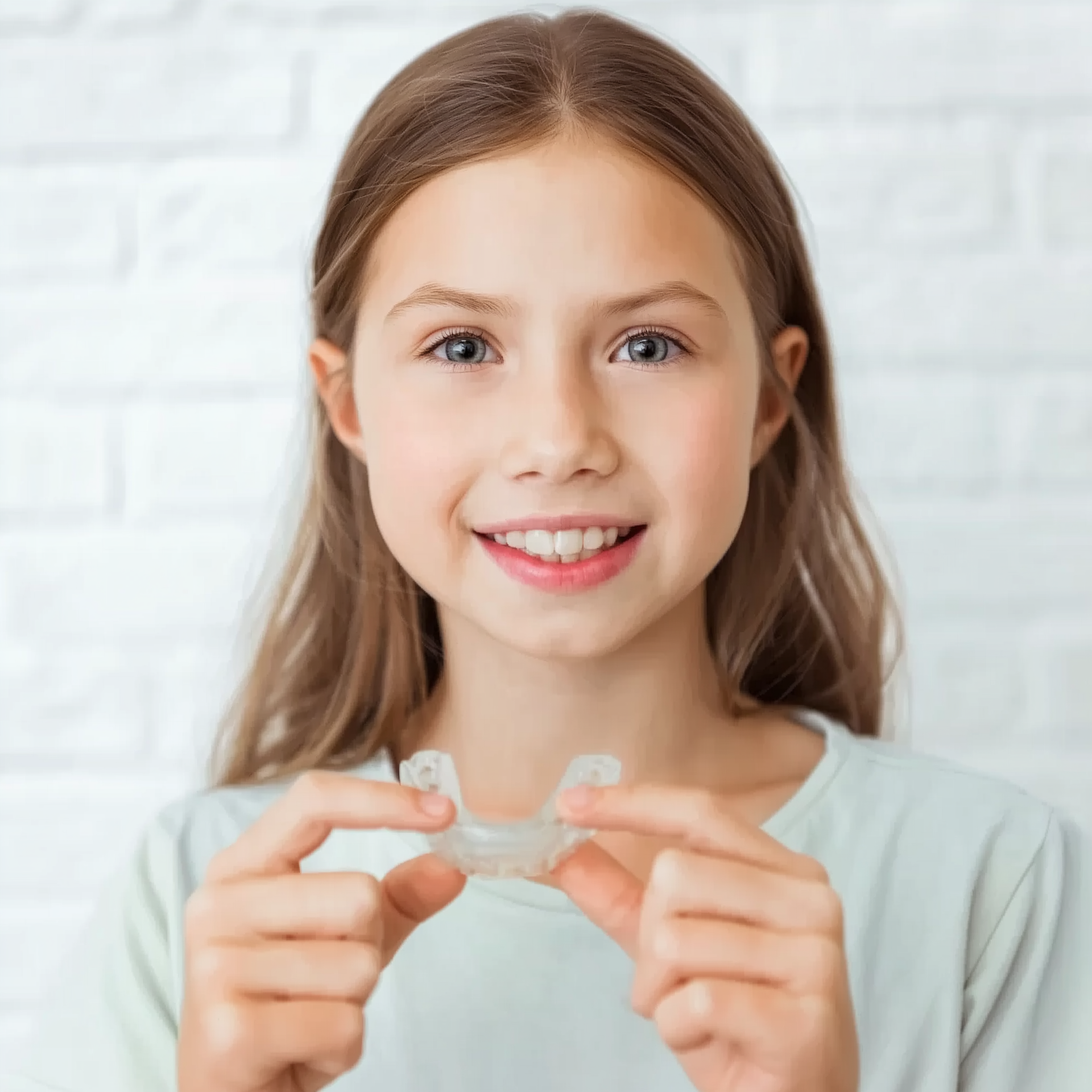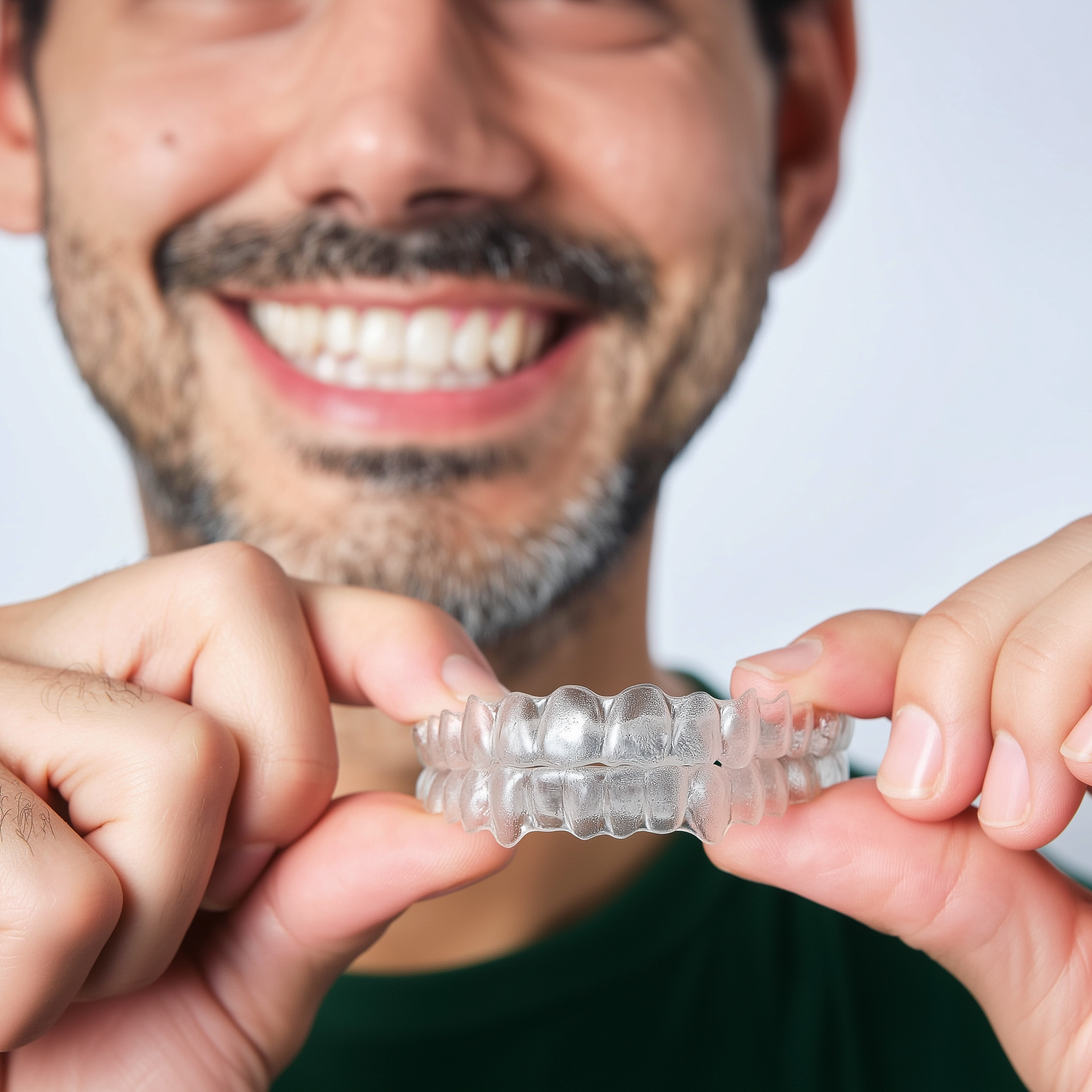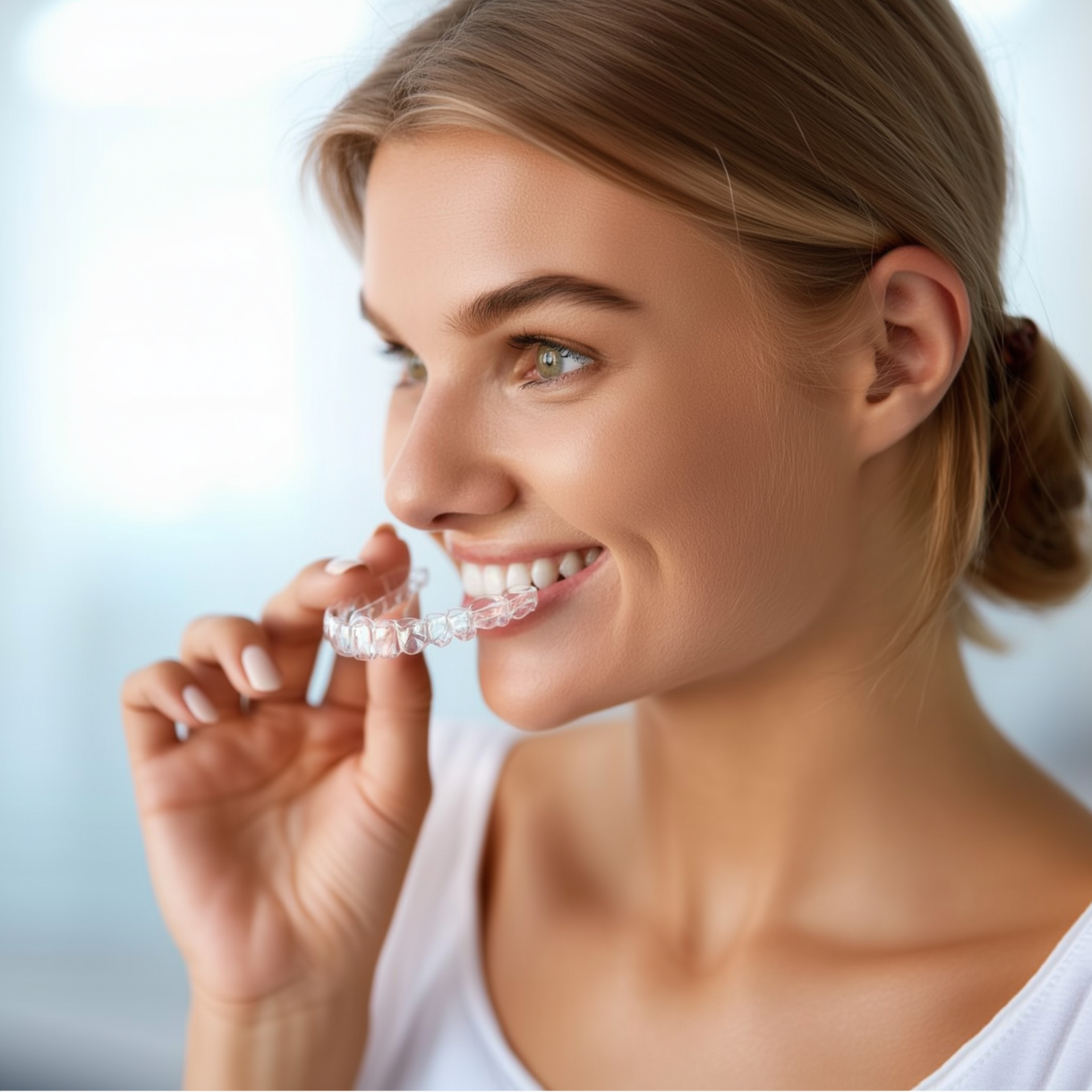
A complete treatment timeline guide from Elevated Orthodontics for patients of all ages.
For most patients, braces and Invisalign take about the same amount of time. As an Invisalign Diamond Apex provider, Elevated Orthodontics has the experience and advanced planning skills to use Invisalign for a wide range of orthodontic needs, including complex bite corrections and extraction cases. Invisalign appointments may also be spaced farther apart, but successful treatment depends on wearing the aligners for at least 22 hours each day. Your specific needs and how closely you follow the treatment plan will have a greater effect on your timeline than the appliance you choose.
KEY TAKEAWAYS
- Braces and Invisalign usually take about the same amount of time when treating similar cases.
- Elevated Orthodontics can treat far more than mild or moderate concerns with Invisalign. Our doctors plan Invisalign treatment for complex bites, extraction cases, and advanced tooth movements.
- Research comparing appliances reports averages across many doctors and patients. Those averages do not define what an experienced Invisalign Diamond Apex provider can treat.
- Invisalign must be worn for at least 22 hours a day. Consistent wear is one of the biggest factors in staying on schedule.
- Your bite, biology, and follow-through affect your timeline more than the name of the appliance.
- The best way to get an accurate finish date is through an exam and diagnostic records.
Two patients begin treatment on the same Monday. One is a high school sophomore with crowding in the lower front teeth. The other is a 41-year-old with a deep bite who needs a tooth removed. Both want to know when treatment will be finished, and both wonder whether Invisalign can handle their case.
At Elevated Orthodontics, the answer is not limited by the outdated idea that Invisalign is only for simple tooth movement. We have practiced orthodontics exclusively in Bakersfield since 1988 and have finished thousands of cases with braces and clear aligners. As an Invisalign Diamond Apex provider, we have the experience and advanced planning skills to treat a full range of orthodontic needs with Invisalign, including complex bite corrections and extraction cases.
Here is what our experience has taught us: the appliance alone rarely decides the timeline. Your treatment plan, your biology, and how closely you follow that plan matter much more.
Is Invisalign Faster Than Braces?
Usually, neither option is automatically faster. When two patients have similar orthodontic needs, braces and Invisalign often have similar treatment times.
A 2024 systematic review in Clinical Oral Investigations examined ten studies comparing clear aligners and braces for dental crowding. Six of the studies were randomized controlled trials. The review found no significant difference in treatment time for mild to moderate crowding.
A 2025 systematic review and meta-analysis in the European Journal of Orthodontics examined 15 trials involving 1,084 patients. It found no significant difference in treatment time or overall treatment quality in non-extraction cases.
In the extraction subgroup, fixed appliances received higher average treatment-quality scores across the studies reviewed. That finding describes the average results in those trials; it does not mean Invisalign cannot treat extraction cases. The authors also noted differences among the studies, varied levels of bias, limited evidence, and short follow-up periods. More high-quality research is still needed.
At Elevated Orthodontics, needing an extraction or having a complex bite does not automatically rule out Invisalign. Our Diamond Apex experience allows us to plan and manage advanced Invisalign treatment that many patients, and even some providers, may assume requires braces.
How Long Do Braces Take?
Most people wear braces for 12 to 24 months, according to the American Association of Orthodontists(AAO). Straightforward alignment can finish sooner. Cases involving jaw growth, extractions, or surgery can run longer.
Braces work continuously. There is no wear schedule to follow, because the brackets and wires stay on the teeth until treatment ends.
That constant, uninterrupted force is part of why the AAO notes braces can treat a wide range of bite problems and tend to work faster than other options for complicated cases.
Braces are a powerful treatment option for a full range of orthodontic needs. At Elevated Orthodontics, Invisalign is too. The better choice is the one that fits your treatment goals and daily life.
How Long Does Invisalign Take?
For a comparable case, Invisalign usually falls in the same 12 to 24 month range, and simple cases can finish sooner. The number of aligners depends on the movements your teeth need, not a standard schedule.
Each aligner is typically worn for about a week before you move to the next one in the series, according to the AAO.
So your total time is essentially the number of aligners multiplied by how long each one stays in. Missing hours stretches both halves of that equation.
What Actually Decides How Long Treatment Takes?
Three things control your timeline far more than the appliance does: how far your teeth have to move, how your body responds, and how consistently you follow the plan.
Complexity. The distance and direction your teeth need to move help set the treatment timeline. A complex case can be treated with Invisalign at Elevated Orthodontics, but advanced movements still require careful planning and enough time to complete safely.
Biology. Bone remodels at its own pace, and that pace differs from person to person no matter which appliance is on the teeth.
Consistency. Wear time, elastics, and kept appointments decide whether you finish near that floor or well past it.
How Many Hours a Day Do You Have to Wear Invisalign?
At least 22 hours a day, according to the AAO. That leaves roughly two hours for meals and brushing, which is less flexibility than most people expect when they first hear the word removable.
The AAO states the problem plainly: aligners cannot work unless they are in the mouth. This is the one part of your timeline you control completely.
In our experience, this is where most aligner delays come from. Not the technology and not the case, but hours quietly lost at lunch, at practice, and overnight.
PROTECT YOUR TIMELINE
- WEAR. Aligners in for at least 22 hours a day. Out for meals and brushing only.
- SWITCH. Change to the next aligner on the schedule we give you, not when the current one starts to feel loose.
- PACK. Keep your case with you. Aligners wrapped in a napkin end up in the trash, and a replacement costs you days.
- PULL. If you are in braces and we prescribe elastics, wear them exactly as directed. Skipped elastics add months, not days.
- CALL. Tell us about a loose bracket or a cracked aligner within a day or two, not at your next appointment.
Braces and Invisalign, Side by Side
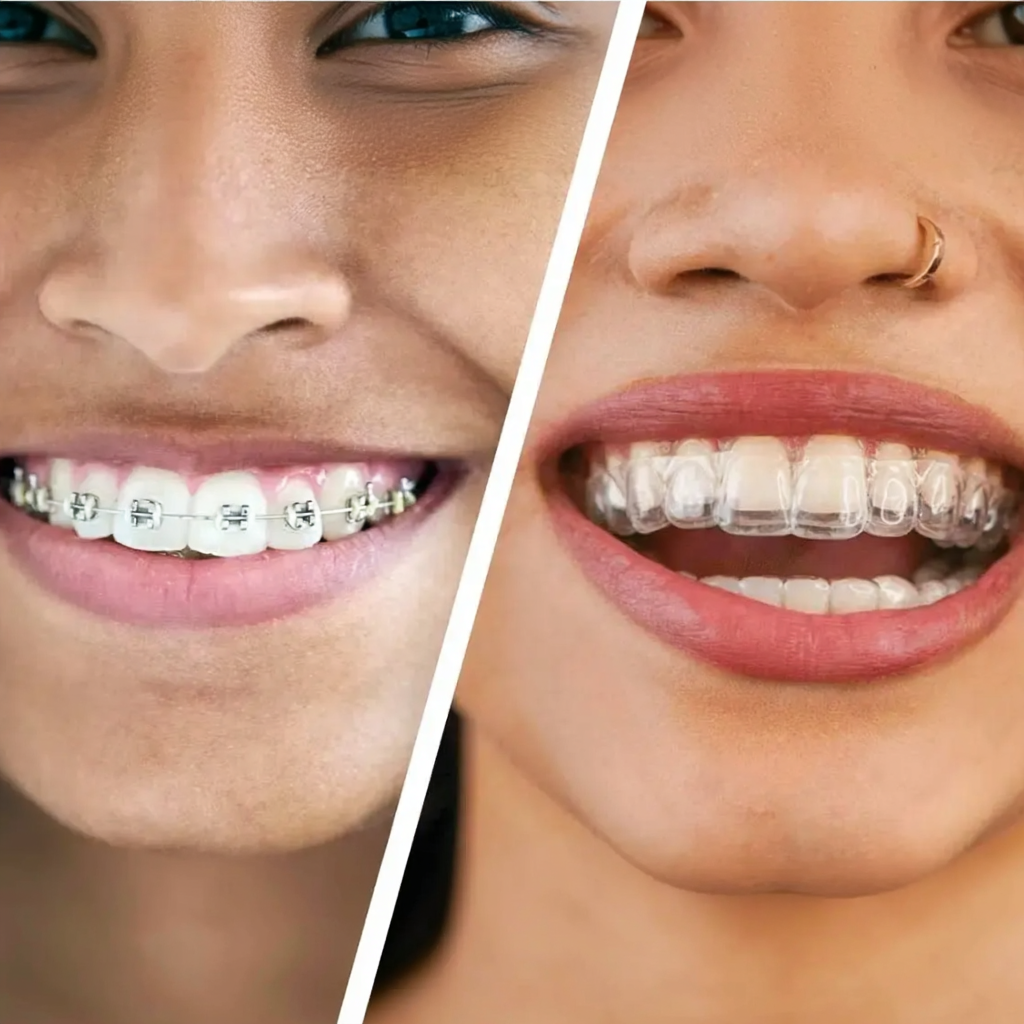
At Elevated Orthodontics, both braces and Invisalign can treat a full range of orthodontic needs. The most important differences are how the appliances look, how they affect eating and cleaning, how often you visit us, and how much daily responsibility they require.
| Comparison | Braces | Invisalign |
|---|---|---|
| Typical treatment time | Braces 12 to 24 months for most patients (AAO) | Invisalign Usually a comparable range for a similar case |
| Best suited for | Braces A wide range of bite problems, including complex and extraction cases | Invisalign The same broad range of alignment and bite concerns, including complex and extraction cases, planned by an Invisalign Diamond Apex provider |
| Wear requirement | Braces Fixed to the teeth and working around the clock | Invisalign At least 22 hours a day, removed and replaced by the patient |
| Changes during treatment | Braces Wire adjustments at scheduled visits | Invisalign A new aligner about every week |
| Typical visit interval at our office | Braces About every 4 weeks | Invisalign About every 12 weeks |
| Biggest risk to your timeline | Braces Loose brackets and skipped elastics | Invisalign Hours the aligners are not being worn |
Does Your Age Change the Timeline?
Not as much as people assume. Healthy adults can be treated at any age as long as the teeth, gums, and supporting bone are sound, and adult braces or aligners are not automatically slower than teenage treatment.
The main difference is growth. A younger patient’s plan may use natural jaw growth to help correct the bite. Because an adult’s jaws have finished growing, that same bite may require a different plan, such as advanced tooth movement, extractions, specialized appliances, or jaw surgery. Elevated Orthodontics can include Invisalign in these advanced adult treatment plans when appropriate, even when the case is complex.
Want a real timeline instead of an average?
Averages are useful for reading. They are not useful for planning. An exam with records gives you a projected finish date for your actual bite, along with what each appliance would mean for it.
Consultations at Elevated Orthodontics are free, in the office or online. Call (661) 665-7600 or schedule your consultation here.
Why Families Choose Us
Invisalign expertise for cases of every level. Elevated Orthodontics is an Invisalign Diamond Apex provider. We treat Invisalign at a high volume and use advanced planning to manage everything from mild crowding to complex bites, extractions, and difficult tooth movements.
Decades of experience backed by advanced training. Dr. Don Montano earned his dental degree from the University of California, San Francisco, and his master’s degree in orthodontics from the University of Washington. He has practiced orthodontics exclusively since 1987, served Bakersfield since 1988, and founded the national Smile for a Lifetime Foundation. Dr. Tae Kwon earned his dental degree from UCLA and his master’s degree in orthodontics from the University of Connecticut. He researched Invisalign outcomes in jaw surgery at Yale School of Medicine and continues to teach as an adjunct faculty member at UConn.
Experience built through more than 15,000 smiles. Our recommendations come from completing thousands of cases with both braces and clear aligners. We understand what each appliance can do and how to design treatment around the patient—not a one-size-fits-all system.
Fewer trips for patients driving in. Aligner patients are typically seen about every 12 weeks compared with about every four weeks for braces, which matters when you are coming from Delano, Taft, or Shafter.
Progress watched between visits. Dental Monitoring lets us check your movement from your phone, so we catch tracking problems early instead of at your next appointment.
A record you can check yourself. More than 1,100 five-star Google reviews from patients across Kern County.
A practice that gives smiles away. Dr. Montano is the founder and National President of Smile For a Lifetime, a 501(c)(3) foundation that provides orthodontic care to young people who could not otherwise afford it.
Choose between braces and Invisalign based on the differences that matter most to you, including appearance, daily hygiene, appointment frequency, and your ability to wear aligners for 22 hours a day. Research shows that treatment times are often similar with either option. As an Invisalign Diamond Apex provider, Elevated Orthodontics has the experience and advanced planning expertise to treat even highly complex bite and extraction cases with Invisalign, not just simple alignment concerns. The fastest and most effective treatment is the one carefully designed for your bite and followed as directed.
Let’s put a real date on your smile
Elevated Orthodontics has been straightening smiles in Bakersfield since 1988, and Level-Up Smiles is how we think about every finish line we set. Your consultation is free, whether you come in or start from your kitchen table.
We welcome patients from Delano, Tehachapi, Taft, Shafter, Wasco, Arvin, Lamont, and across Kern County and the surrounding communities.
Call (661) 665-7600, or SCHEDULE HERE.
Frequently Asked Questions
Is Invisalign faster than braces?
Usually, neither appliance is automatically faster. Braces and Invisalign often take about the same amount of time when treating similar needs. Your bite, biology, and consistency with the treatment plan affect your timeline more than the appliance name.
Can Invisalign treat complex orthodontic cases?
Yes. At Elevated Orthodontics, Invisalign is not limited to mild or moderate concerns. As an Invisalign Diamond Apex provider, we have the experience and advanced planning skills to treat complex bite corrections, extraction cases, and difficult tooth movements with Invisalign. Complexity alone does not rule out clear aligner treatment in our office.
Can Invisalign be used when teeth need to be removed?
Yes. Elevated Orthodontics can plan Invisalign treatment for patients who need extractions. These cases require careful control of tooth movement, which is why the orthodontist’s experience and treatment planning are so important.
Do adults take longer than teenagers to finish orthodontic treatment?
Not necessarily. Healthy adults can be treated successfully at any age, and adult treatment is not automatically slower. Adults are no longer growing, so bite corrections that use jaw growth in a younger patient may require a different plan. Elevated Orthodontics can use Invisalign as part of advanced adult treatment, including complex care.
Sources
- American Association of Orthodontists. How Do Braces Work? https://aaoinfo.org/treatments/braces/
- American Association of Orthodontists. Aligners. https://aaoinfo.org/treatments/aligners/
- American Association of Orthodontists. Aligners vs. Braces: A Comparison. https://aaoinfo.org/whats-trending/braces-vs-clear-aligners/
- Alhamwi, A. M., Burhan, A. S., Idris, M. I., and Nawaya, F. R. (2024). Duration of orthodontic treatment with clear aligners versus fixed appliances in crowding cases: a systematic review. Clinical Oral Investigations , 28(5), 249. DOI: 10.1007/s00784-024-05629-y. https://doi.org/10.1007/s00784-024-05629-y
- Alhafi, Z. M., Hajeer, M. Y., Alam, M. K., and Jaber, S. T. (2025). Quality and stability of orthodontic treatment outcomes with clear aligners versus fixed appliances: a systematic review and meta-analysis. European Journal of Orthodontics , 47(6), cjaf091. DOI: 10.1093/ejo/cjaf091. https://doi.org/10.1093/ejo/cjaf091